Longshot Bets Dominate Kalshi and Polymarket, Losing 98% of the Time
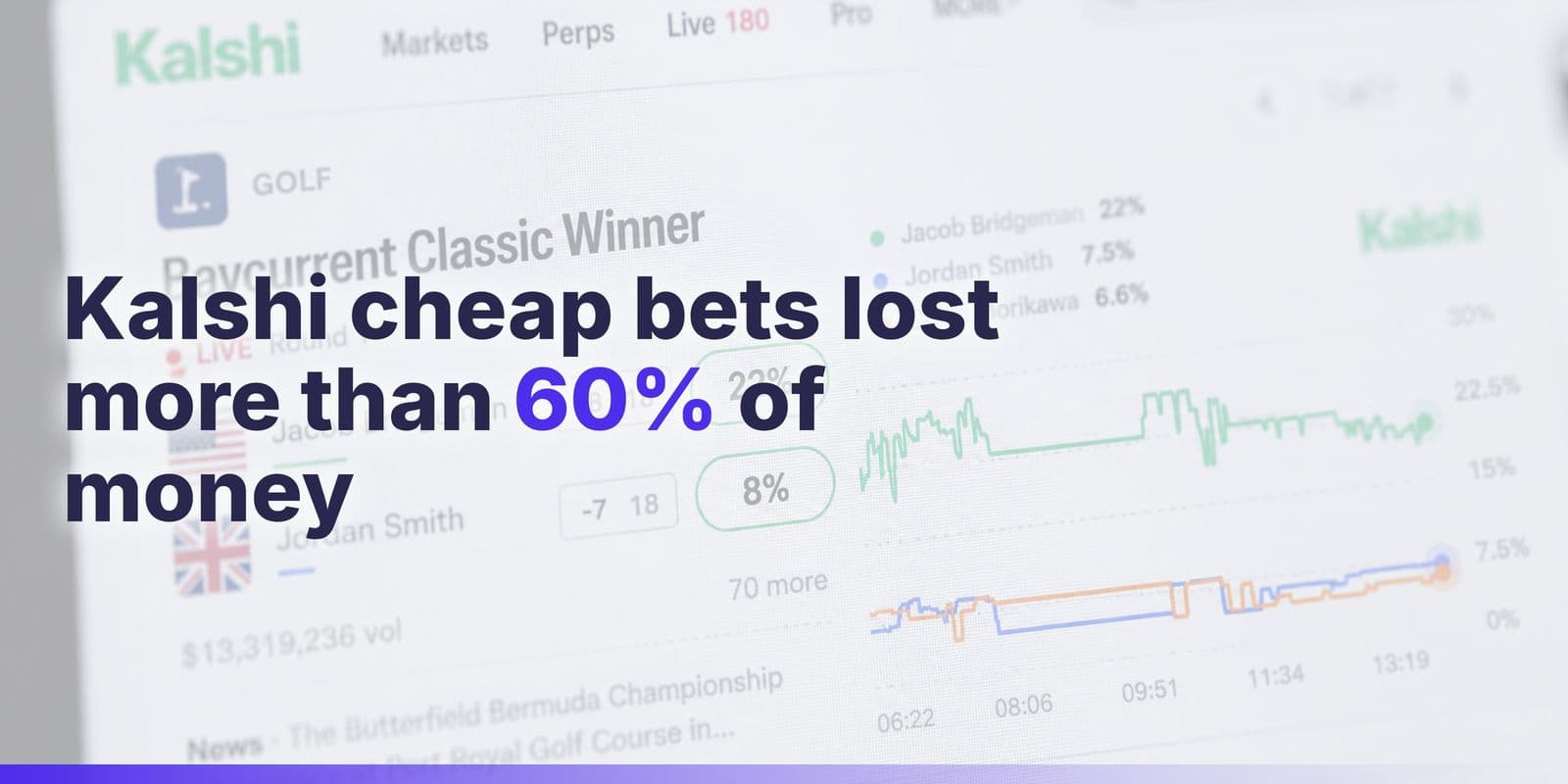
Studies of both platforms find cheap contracts win less often than their price implies, and Kalshi buyers of contracts at 10 cents or less lost more than 60% on average.

· 2 min · 2 min read
Bets on unlikely outcomes, which lose about 98% of the time, make up the bulk of trading on Kalshi and Polymarket, according to a Bloomberg analysis of trading data published on Oct. 7.
That matters most for anyone buying cheap contracts. On both sites, a contract pays $1 if the event happens, so a 5-cent price implies a 5% chance. Academic studies of both platforms find those cheap contracts win less often than their price suggests, and the shortfall eats most of the stake.
Cheap Contracts Lose Most of Their Money
A University College Dublin study of more than 300,000 Kalshi contract prices from 2021 through April 2025 found that buyers of contracts costing 10 cents or less lost more than 60% of their money on average.
In the authors' example, a 5-cent contract that wins 3% of the time returns minus 40% before fees. About a third of the prices in their data were 10 cents or less.
Expensive contracts did the opposite. Those priced above 70 cents earned small positive returns after fees. Across all contracts, the average return before fees was minus 20%.
In other words, cheap contracts lost more often than was priced in, and expensive contracts won more often than their price implied.
A September study of Polymarket covering 588 million trades found a milder version. Weighted by dollars spent, purchases below 10 cents lost 19.3 cents per dollar, though sports longshots bucked the pattern.
Polymarket Says Sharp Traders Drive the Volume
CNBC reported on Sept. 30 that $158 million traded on Egypt's odds of winning the 2026 World Cup on Polymarket's international exchange. That topped the $152 million traded on eventual winner Spain, even though Egypt's chances never crossed 0.5%.
Kyle Gesuelli, who runs revenue and analytics at Polymarket, told CNBC that skilled traders known as sharps drive that activity by correcting mispriced contracts. "It's actually healthy for markets because it brings pricing imbalances back into balance," he said.
Both companies use volume to sell their growth. Kalshi has already ended a volume rewards program amid wash-trading questions. Both companies are reportedly exploring stock market listings as soon as 2027, according to CNBC, which would put these trading figures in front of public investors.
Treat gambling as entertainment you pay for. 18+, and if it stops feeling like entertainment, help exists at BeGambleAware and GamCare.
Read More Articles
See more
Stake Plans Alberta Launch as Province's Grey-Market Deadline Nears
Cambodia Sends Joint Teams to Inspect Casinos for Online Gambling
Robinhood Added $25 Million of Bitcoin to Its Balance Sheet