Don't Tail the Whale: What Viral Stake Bet Slips Don't Show
A crypto casino account posted an $815,000 win to 1,157 likes this week, and also posted a $6.5 million monthly loss and a $73,000 rebate, which is the number that actually explains the account.


· 3 min · 3 min read
A viral bet slip screenshot on X.com showing an $815,000 win drew over 1.5k likes and hundreds of comments on July 22.
Three days earlier, the same account, Jelitics, posted a Stake milestone: $1 billion wagered in a single year, enough to reach Obsidian, the platform's top VIP tier.
Both screenshots are real. But neither tells you whether following that account is a good idea.
The account also posts its costs, which is where it gets useful.
The Economics of Monthly Bonuses
On July 15, it complained publicly about losing $6.5 million in a month and receiving only a $73,000 monthly bonus in return. That one post explains more about crypto casino economics than any win screenshot ever will.
Stake sizes monthly bonuses from four inputs:
- VIP level,
- wager volume for the period,
- profit or loss balance with losses partially compensated, and
- game-type weighting.
None of those four inputs rewards winning. Every one of them rewards volume, which is the only variable the house needs, since the edge does the rest. Contrary to popular belief, a monthly bonus is not a share of the profits but a rebate on expected loss. It's sized to keep a player wagering rather than to make him whole.
A player at the top of that ladder is playing a materially different game from a follower with $200 in a wallet.
The Rakeback Changes the Math, Not the Odds
The part that gets lost in the replies is that rakeback and loss rebates do not turn a losing bet into a winning one. They slow the rate at which a high-volume player bleeds.
A $73,000 rebate against $6.5 million in losses is still only about 1.1 percent back.
That is meaningful at that scale and completely irrelevant for many players. When a whale account posts a win, you are looking at one outcome drawn from a sample size you might never have, cushioned by a rebate structure few qualify for.
Skepticism about accounts like this is not fringe:
- A rival crypto casino publicly alleged in June that the posts were part of a marketing campaign, though that claim came from a direct competitor with an obvious commercial interest and no evidence was published alongside it.
- Separately, in May a user flagged an odd structure on one slip, a large handicap stake sitting next to a token moneyline. Replies routinely make the simplest point available, which is that the account overwhelmingly focuses on wins.
The X account has pushed back on all of it. It has mocked the fake-bet accusations directly, more than once, and has said its focus has always been growing the page and making it entertaining.
Take that at face value. An entertainment page and a disclosed advertisement are still two different things, and only one of them is regulated.
What the FTC Actually Requires
The rules here are not vague. The Federal Trade Commission treats any material connection between a promoter and a brand as disclosable (every time the endorsement appears).
That covers cash, affiliate commissions, free play, VIP perks, and business relationships.
The FTC's endorsement guidance sets a plain standard: a disclosure has to be difficult to miss and easy for an ordinary person to understand. In 2017, the agency settled its first influencer case against two gaming creators who promoted a skin-gambling site they secretly owned.
None of that establishes anything about any specific account. It establishes what you are entitled to know before you act on a screenshot.
What This Means for Players
Treat viral bet slips as advertising until proven otherwise. Three questions cover most of it:
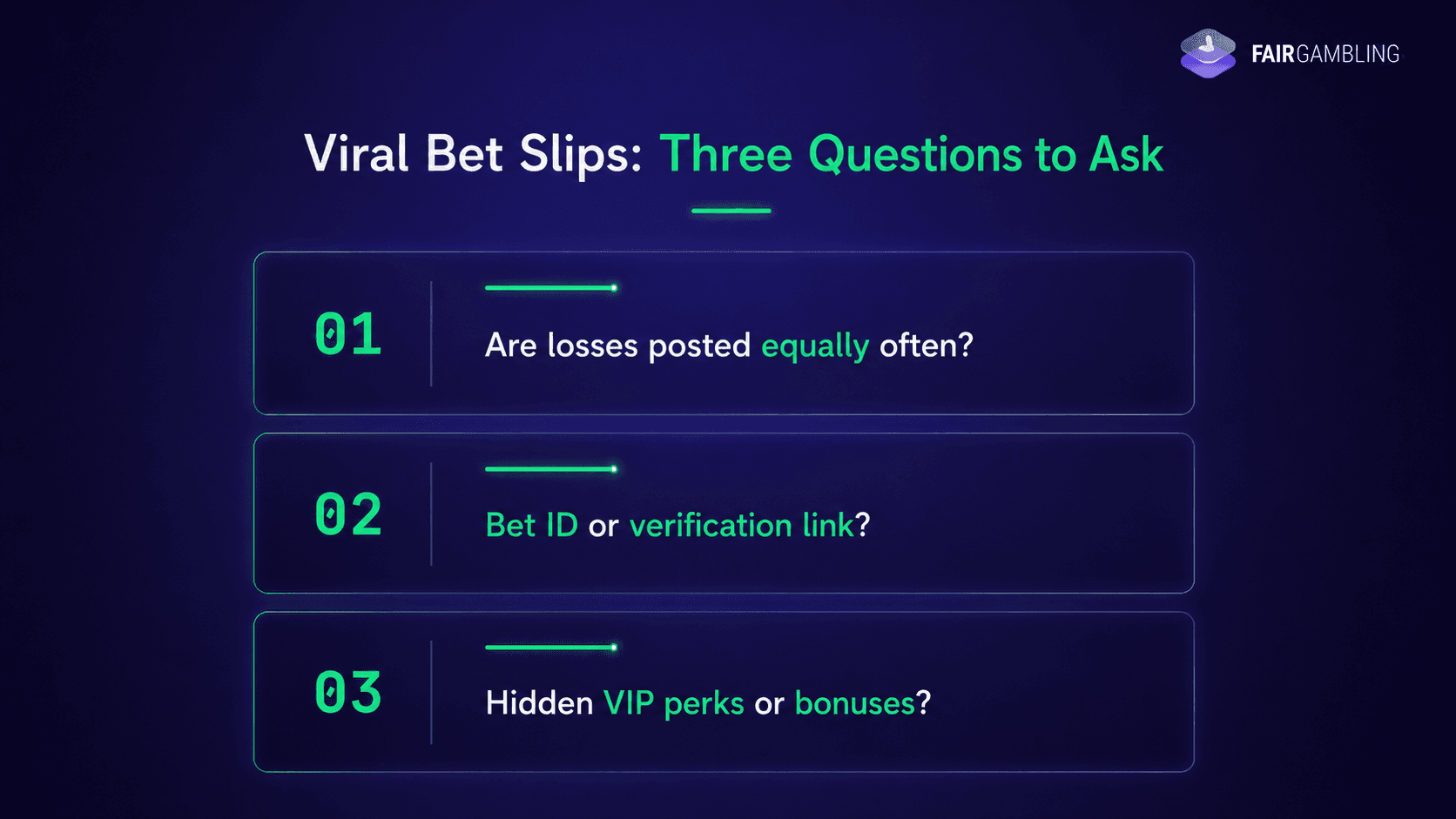
- Does the account post losing sessions at the same rate as winning ones?
- Is there a verifiable bet ID or a provably fair verification link, or just a cropped image?
- Does the poster receive rakeback, a VIP host, an affiliate code, or a bonus tier you cannot access?
If the answer to that last one is yes and it is not stated in the post, the post is an ad whether or not anyone calls it one.
Tail a strategy if you can verify it. Never tail a bankroll.
Read More Articles
See more
PointsBet Accepts Ontario's First iGaming Suspension Over Porter Bets

Stake Will Fight the Ruling That Shut Its Brazil Site Again

Utah Sues Kalshi, Calling Its Sports Contracts an Illegal Gambling Nuisance