Prediction Markets vs. Gambling Law: A Global Crackdown?
Prediction markets are battling gambling laws worldwide in 2026: Many EU countries now block Polymarket, while Kalshi faces lawsuits, injunctions, and daily fines across US states. Can the US and Europe solve regulation together?

While punters have given prediction markets a resounding YES in 2026 with record revenue thanks to events like the FIFA World Cup (which got the Council of Europe riled up), these binary options platforms are increasingly hearing a chorus of no's from regulators.
CoinMarketCap reports that there are over 180,000 markets open at present.
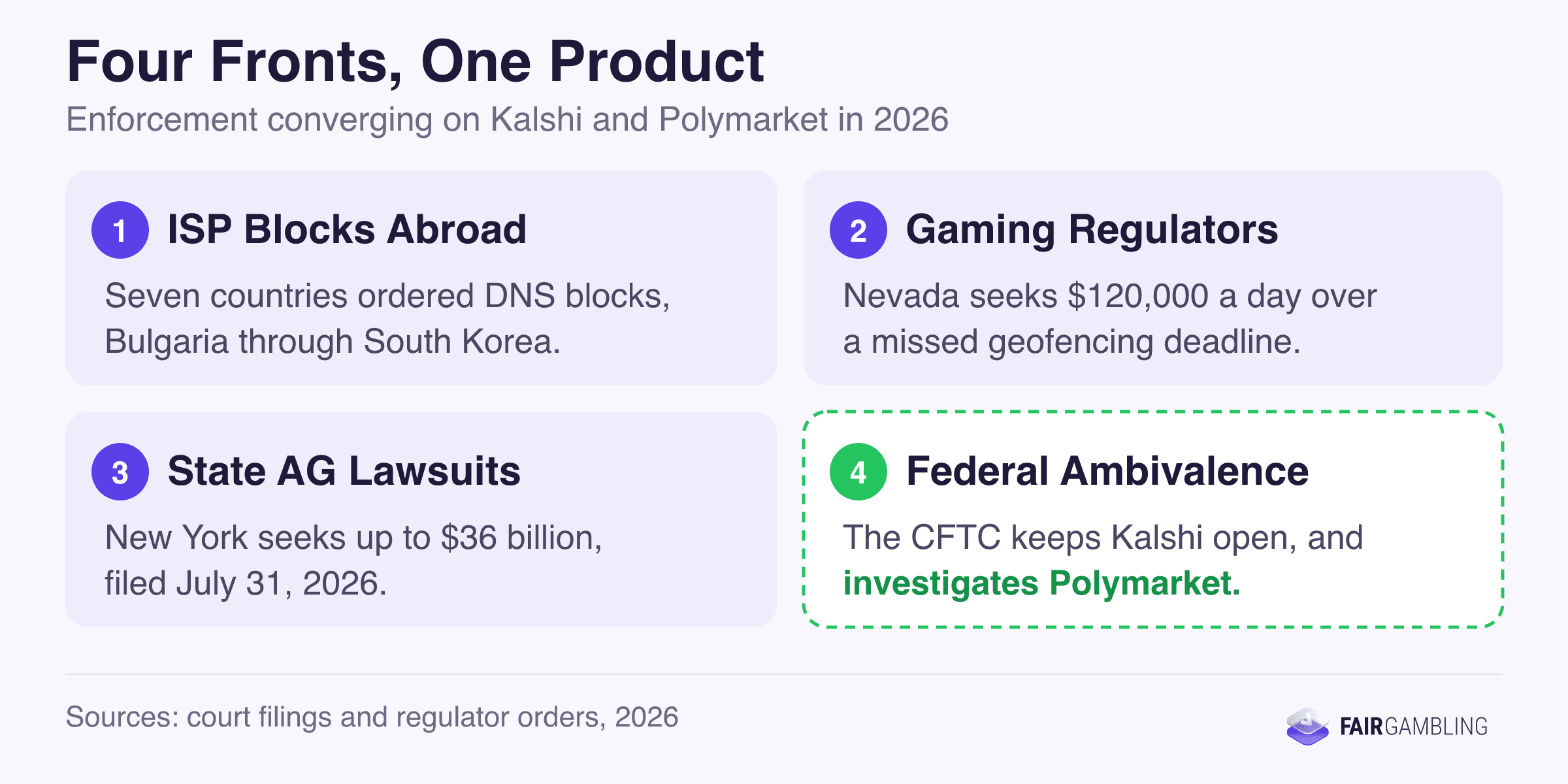
Seven countries have ordered internet providers to block Polymarket so far this year, and in the United States, Kalshi faces a New York lawsuit seeking up to $36 billion, a Nevada motion for $120,000-a-day fines, and court orders in Washington and Utah.
Event contracts have held an unusual regulatory position for years. The Commodity Futures Trading Commission (CFTC) regulates them as derivatives, while the platforms sell them to a retail audience that overlaps heavily with sports bettors. No gambling regulator has licensed them yet.
That position is no longer tenable in 2026. National regulators in Europe, Asia and South America, along with attorneys general in at least six US states, have begun enforcing against the platforms directly.
Which Countries Have Blocked Polymarket in 2026?
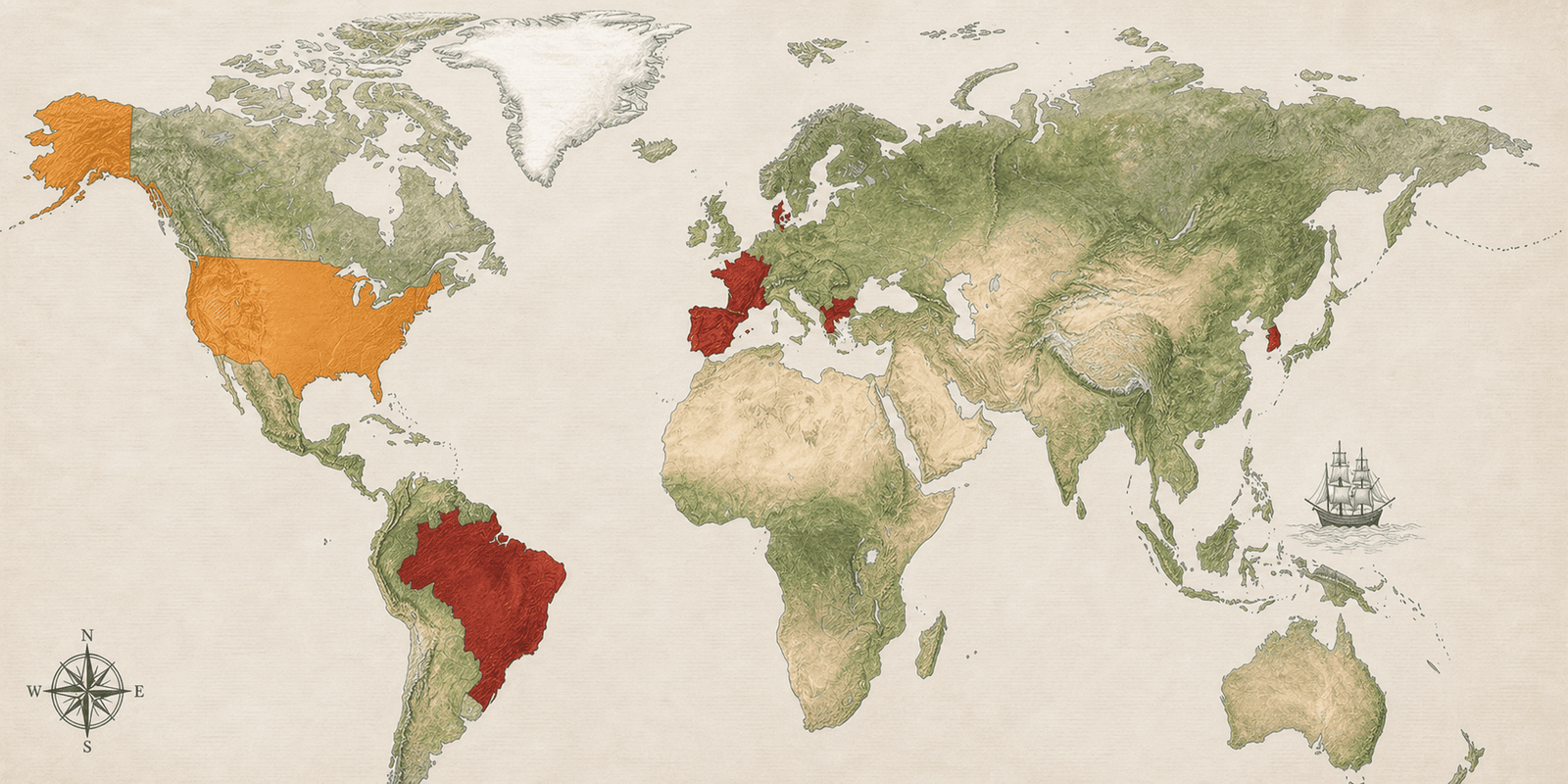
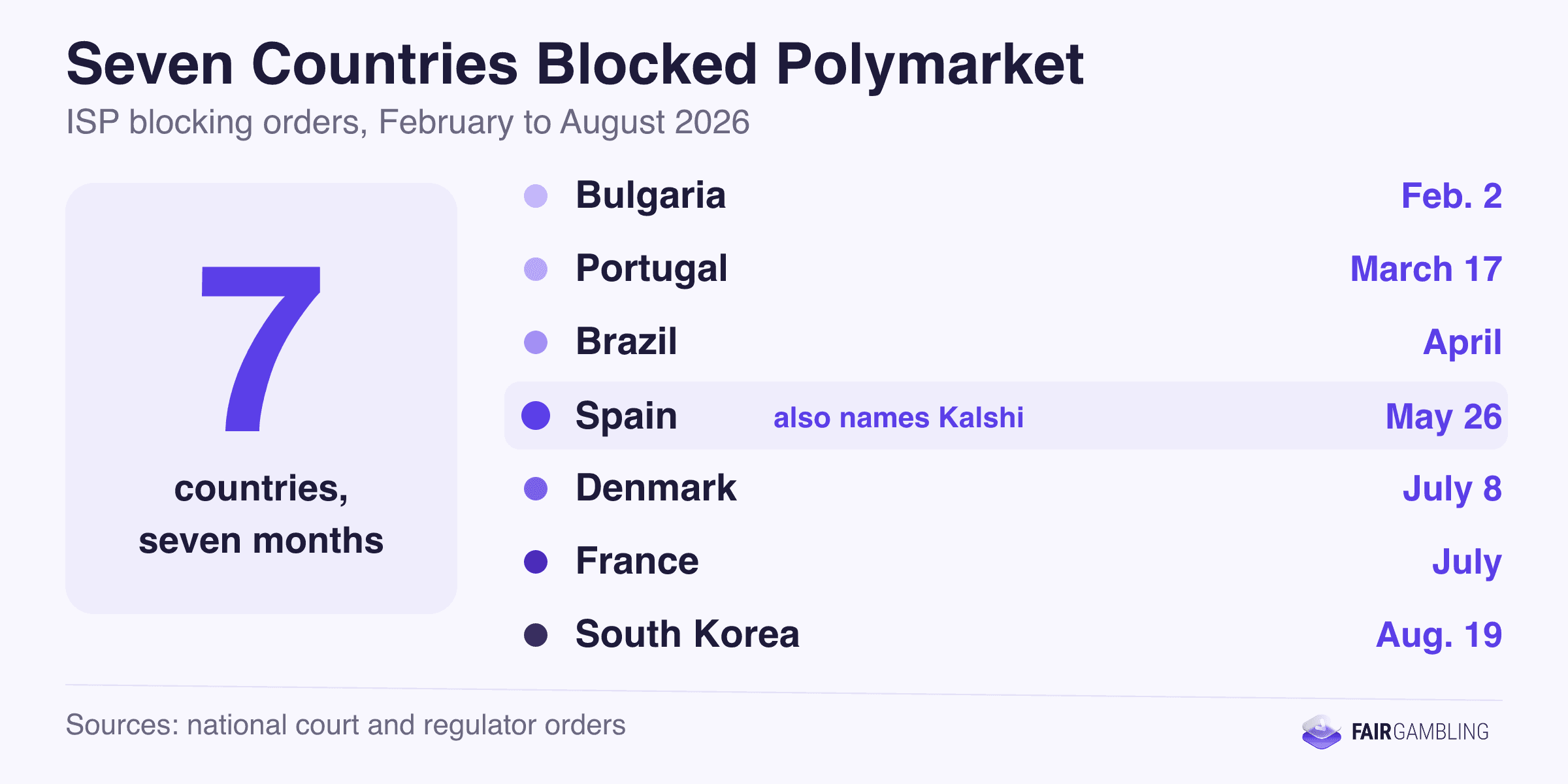
Seven have done so this year: Bulgaria, Portugal, Brazil, Spain, France, Denmark and South Korea. Each acted on the same basis: that the platform holds no domestic gambling license, and most of the measures require internet providers to restrict access at the DNS level.
Sofia Regional Court ordered Bulgarian providers to block Polymarket on Feb. 2, 2026. Portugal's gambling regulator, the SRIJ, issued a nationwide ban on March 17, and Brazil banned prediction markets in April.
The Spanish regulator, the DGOJ, ordered ISPs to block both platforms on May 26, citing the absence of a license and of player-protection safeguards. French authorities followed with their own blocking order in July. On Aug. 19, South Korea's media regulator ruled that the site creates an illegal gambling environment under the Criminal Act and the National Sports Promotion Act, and ordered providers to block Polymarket.
Denmark's measure came through the courts. A July 8, 2026 decision by the Frederiksberg court allowed the Danish Gambling Authority to DNS-block 98 unlicensed sites, Polymarket among them, bringing the authority's total to 870 blocked domains since 2012.
None of the seven orders turned on whether an event contract qualifies as a derivative. Each applied the domestic licensing test a national regulator would apply to any offshore gambling site, and Polymarket did not meet it.
Why Is Nevada Seeking $120,000 a Day From Kalshi?
The state's Gaming Control Board says Kalshi missed an Aug. 12, 2026 deadline to geofence Nevada, a requirement of the injunction barring state residents from buying sports, election and entertainment contracts. The board has asked a Carson City court to impose daily fines of $120,000 after state investigators bought prohibited contracts inside Nevada.
Kalshi disputes the evidence. General counsel Rick Heaslip said the investigators used an outdated version of the app and misrepresented their residency, adding that "they falsified information (breaking federal law) to hunt for a loophole and manufacture another legal grievance." The board responded that "Kalshi missed its agreed-upon deadline to comply with Nevada law." A pending ruling from the 9th Circuit may determine whether prediction markets can operate in the state at all. Polymarket is subject to a separate preliminary injunction covering the same contract types.
Washington imposed broader restrictions. In August, a King County Superior Court judge ordered Kalshi to stop offering sports, elections, politics, entertainment, culture, tech and science, and "mentions" contracts, and to implement multi-source geofencing by Aug. 19 and Sept. 2, subject to the same $120,000 daily penalty.
Geofencing obligations indicate how these courts classify the product. A licensed sportsbook geofences because its state license confines it to one jurisdiction, and Nevada and Washington have now placed that same requirement on Kalshi.
Who Regulates Prediction Markets, the CFTC or the States?
Both claim authority, and no court has resolved the conflict. States rely on their police power over gambling. The CFTC asserts exclusive federal jurisdiction over designated contract markets and has sued several states to defend that position. Rulings in 2026 have gone in both directions.
New York's attorney general sued Kalshi on July 31, 2026 as an unlicensed gambling operation, seeking restitution, disgorgement and penalties that could total $36 billion. The CFTC subsequently used emergency authority to order Kalshi to continue operating while the case proceeds. One state is seeking to shut the platform down while its federal regulator requires it to stay open.
Other rulings have split along similar lines. A federal judge blocked enforcement of Minnesota's felony ban on July 28, after Polymarket, Kalshi and the CFTC all sued. In June, a different federal judge denied Polymarket's request for protection from Michigan's gaming regulators. In August, a court ruled that Utah can enforce its gambling laws against Kalshi. Wisconsin's attorney general has filed enforcement actions, and Massachusetts and New Mexico are pursuing their own.
Federal backing is not unconditional. In June, the CFTC opened what it described as an ongoing and extensive investigation into Polymarket's marketing, which the agency alleges was misleading. The agency defending the sector against the states is investigating one of the sector's two largest platforms.
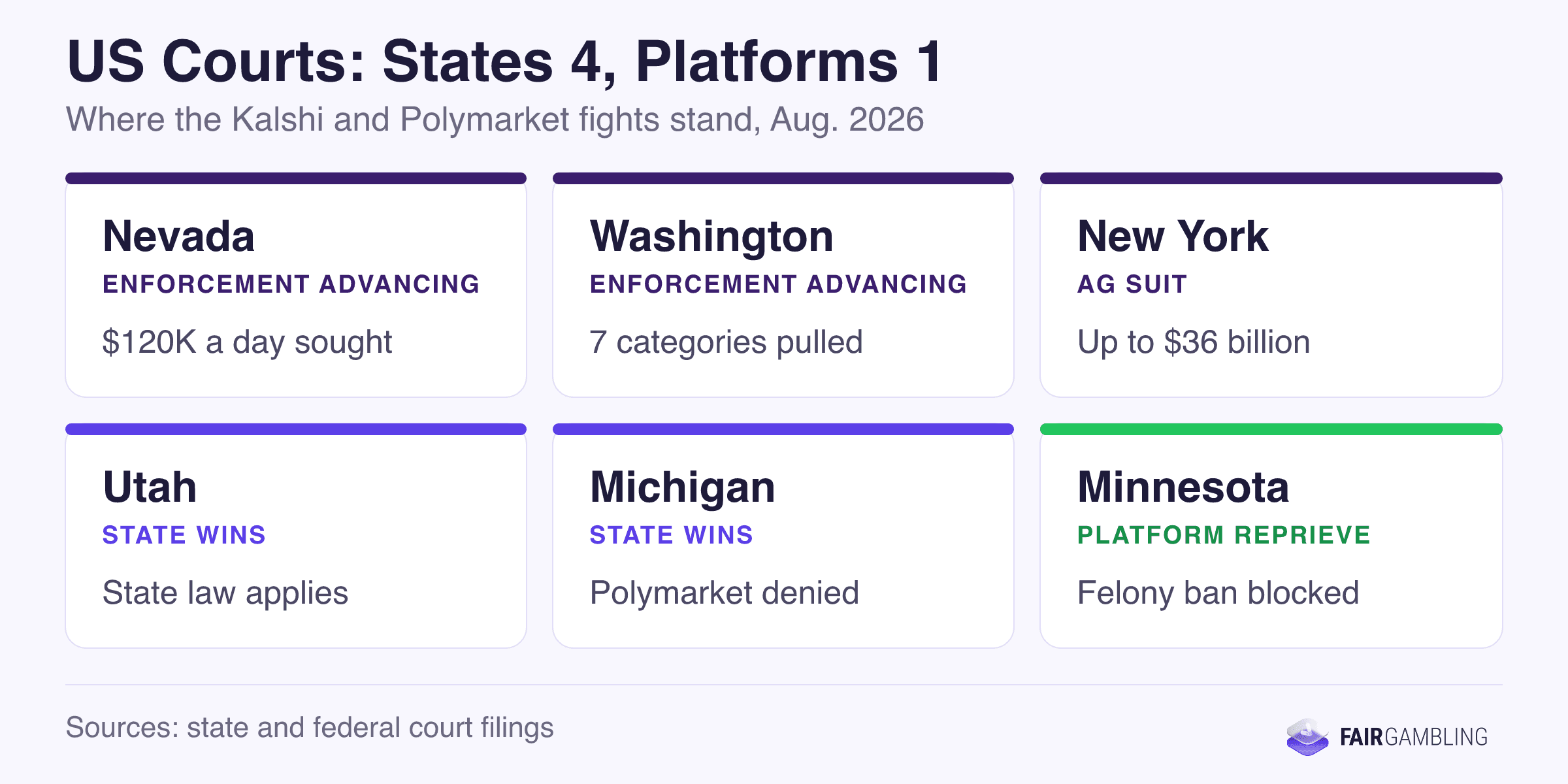
Jurisdiction | Action in 2026 | Status (Aug. 2026) |
|---|---|---|
New York | AG suit, penalties up to $36B | Active; CFTC emergency order keeps Kalshi live |
Nevada | Injunctions vs. both; $120K/day sought | Fines motion pending; 9th Circuit ruling awaited |
Washington | Court order to pull seven contract categories | Compliance deadlines Aug. 19 / Sept. 2 |
Minnesota | Felony ban, effective Aug. 1 | Blocked by federal injunction |
Michigan | State enforcement vs. both platforms | Polymarket denied federal relief |
Utah | State gambling-law enforcement | Federal court sided with the state |
Does a CFTC Designation Protect Prediction Market Players?
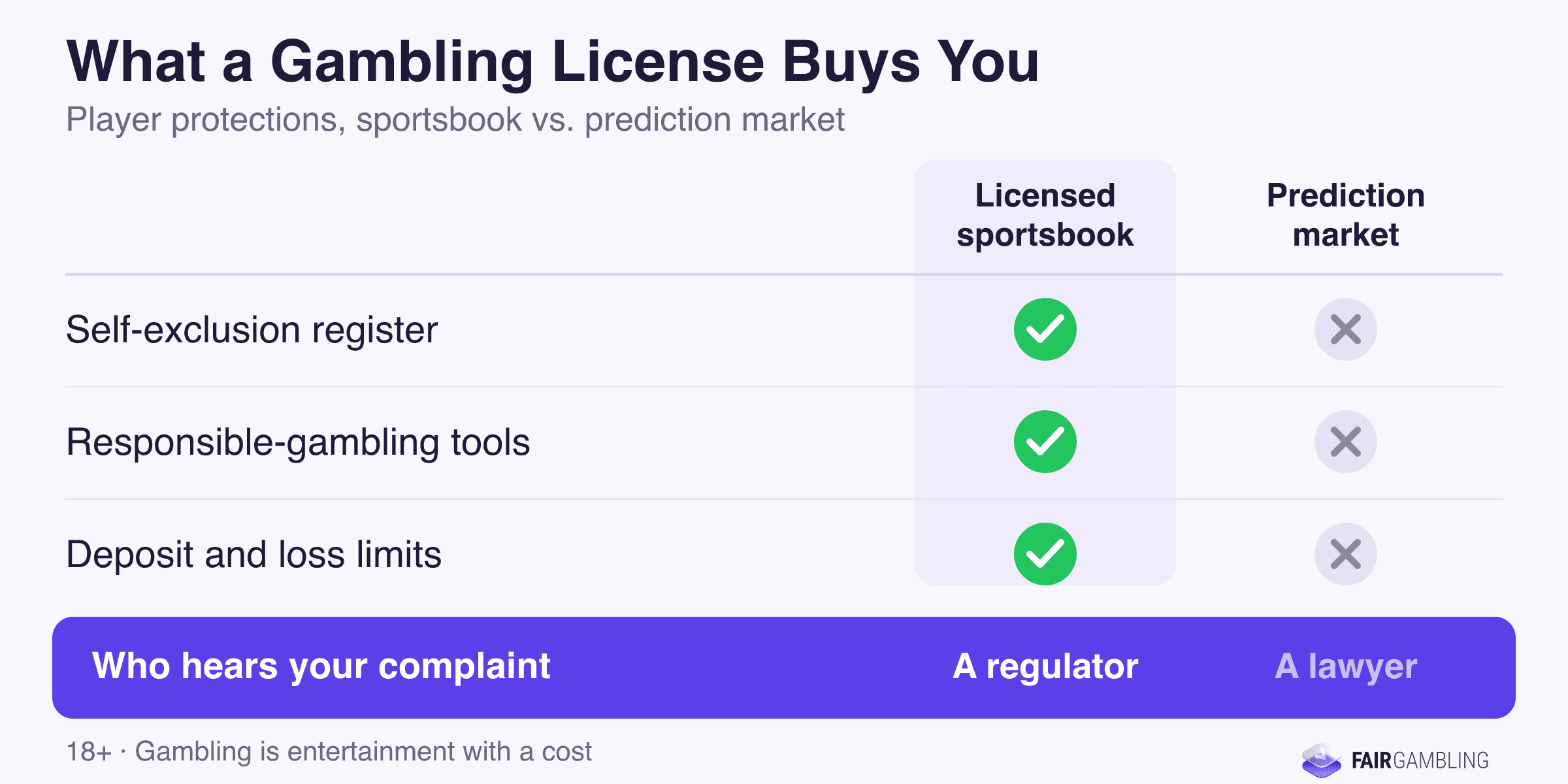
A CFTC designation carries no consumer-gambling protections. State gambling licenses require self-exclusion registers, responsible-gambling tools and deposit limits, and they give players a regulator that accepts complaints.
Congress built the CFTC to oversee commodity derivatives markets, and the agency administers none of those requirements.
Spain explicitly cited the missing player-protection safeguards and licensing when it blocked both platforms in May.
Remedies available to a player involved in a dispute are limited.
- At a licensed sportsbook, a complaint goes to a state regulator with the power to fine or suspend the operator.
- On a prediction market, the available but slower route is private litigation, and actually finding a lawyer willing to take the case.
If federal preemption ultimately prevails, those protection questions will pass to an agency that runs no self-exclusion program and holds no mandate to set deposit limits, for accounts that function much like betting accounts.
What the US And Europe Can Teach Each Other
The solution to prediction market regulation may just lie in the transatlantic divide on how to handle them.
ESMA in 2018 banned the sale of binary options to retail investors, reasoning that all-or-nothing contracts carry a structurally negative expected return, much like gambling products. Every EU state fell in line, leaving Switzerland as the lone European holdout.
The US took the opposite path, classifying event contracts as CFTC-regulated derivatives, and Congress is now weighing over 20 competing bills as platforms like Kalshi and Polymarket face insider-trading probes.
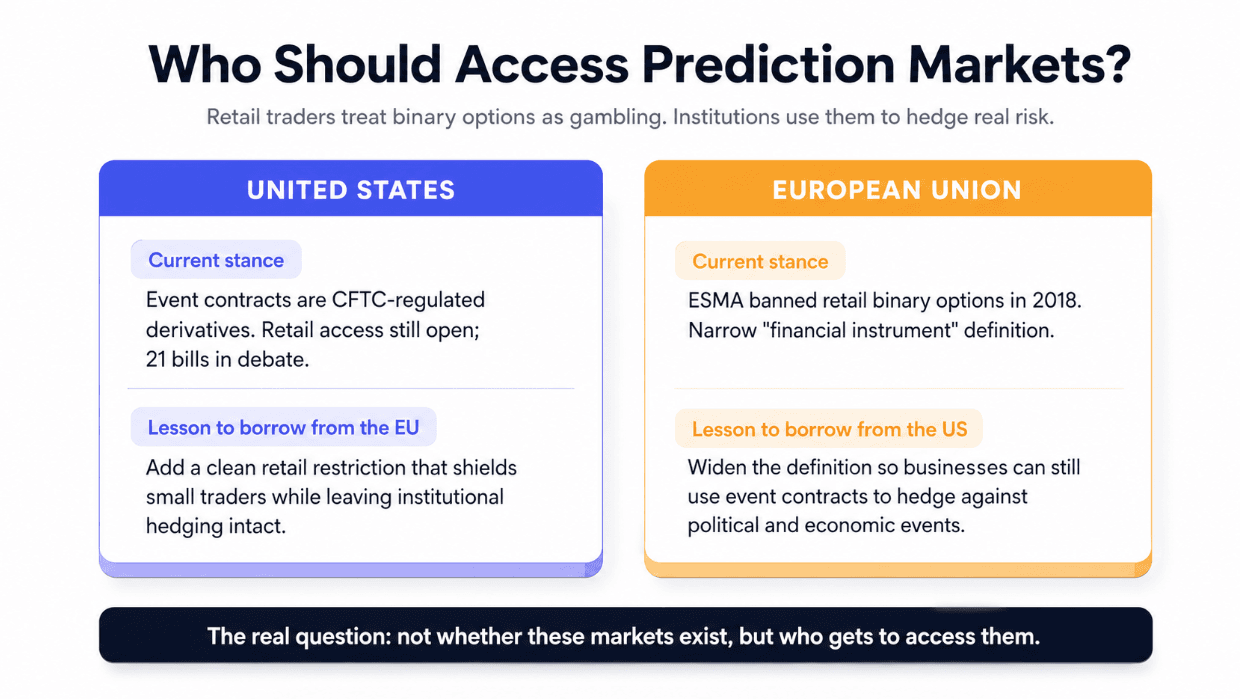
Todd Phillips of the Atlantic Council argues each side has something to teach the other. Rather than asking whether these markets should exist, regulators should focus on who should be able to access them. Retail traders mostly treat these binary options as gambling products while institutions use them to hedge against economic risk. Therefore:
- The US could borrow Europe's clean retail restriction, which shields small traders while leaving institutional hedging intact.
- The EU meanwhile could learn from US law: its narrow definition of "financial instrument" pushes many event contracts out of reach even for businesses, who could utilize them to reduce their financial risk to political or economic events.
What This Means for Players
Gambling law seems to be coming to prediction markets whether they or the CFTC like it or not. Federal courts remain divided on whether they may do so, but for how long?
For players, this lack of regulatory clarity means that if you have an issue with a prediction market in most of the US, there is no clear route to recourse while the jurisdictional fight runs its course.
Before funding an account on any of these platforms, check which regulator, if any, would hear a complaint.
Treat gambling as entertainment you pay for. 18+, and if it stops feeling like entertainment, help exists at BeGambleAware and GamCare.