Six Warning Signs a Crypto Casino Is in Trouble
A field checklist from recent payout crises, closures and license exits - lowering withdrawals caps, template support, license shenanigans, and more.

Five crypto gambling sites have shut down or gone dark since February, and PrimeDice closes on Oct. 8 after 13 years. What they leave behind differs sharply. Some point players to self-serve withdrawal portals, other asks for emails, some hype relaunches, while others quietly disappear. But more risky are the casinos that stay open, take deposits and then stop paying out.
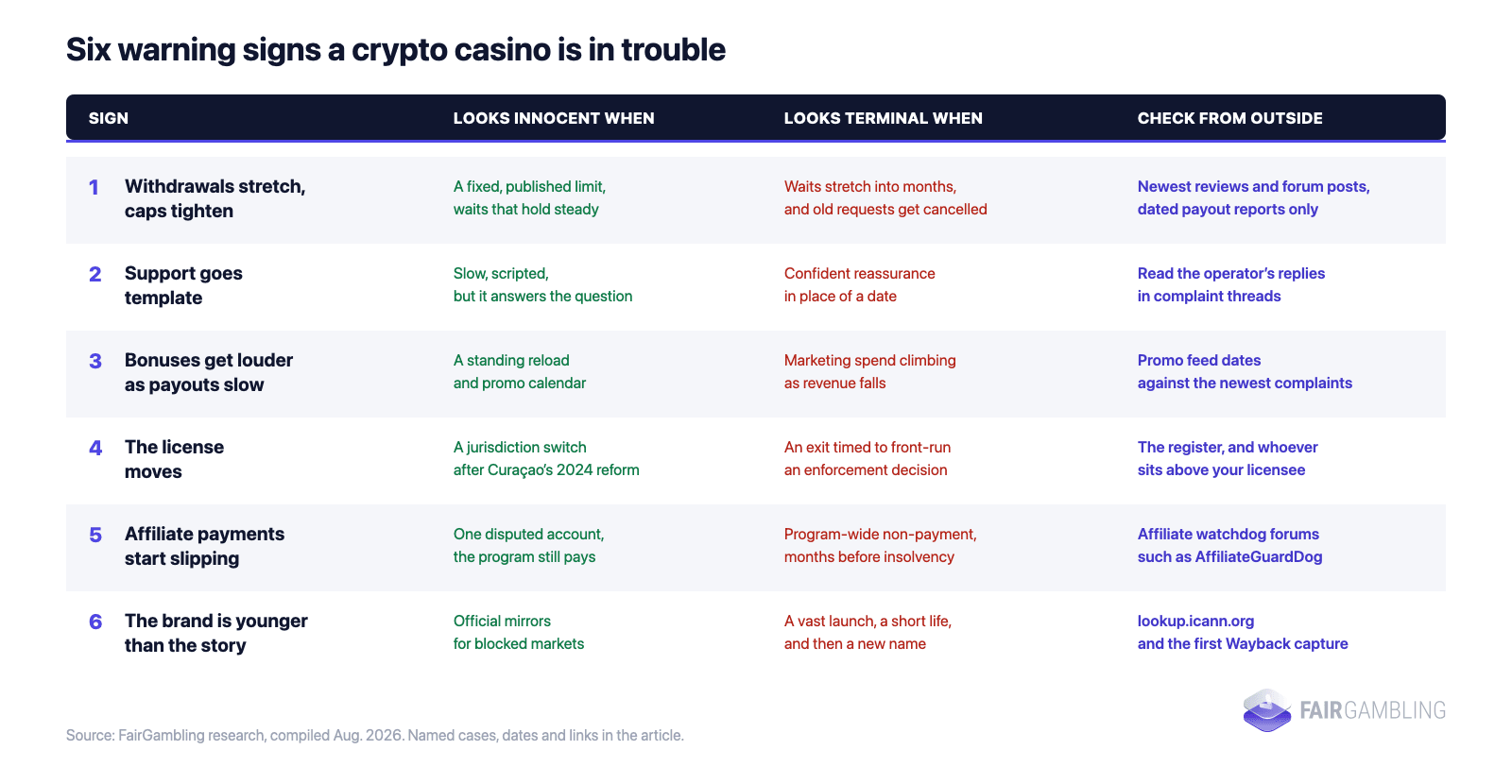
We went back through a decade of payout failures, from a $390 million hole in 2011 to two crypto casinos dead this spring, and pulled six repeating patterns.
Withdrawal Timelines Stretch and Caps Tighten
Lock Poker stayed open two years while it stopped paying. By May 2013, its US players waited five months for a cashout. That December, of 268 players on a public pending-payout list, 177 had waited six months or more.
By May 2014, it held 380 players owed more than $962,000, 155 waiting a year or longer. Lock had also cancelled requests already months old. It closed in 2015 owing millions, and has never paid.
On withdrawal limits, a fixed cap is policy, but one that tightens as the queue grows is rationing, and just as dangerous are stalled withdrawals, with excessive requests for additional documents against standard KYC practice.
The check: sort reviews and forum posts newest first; read dated payout reports, not star averages as these can hide recent problems.
Support Stays Polite but Stops Answering Questions
Full Tilt Poker told players their deposits sat in segregated accounts.
On March 31, 2011, it owed about $390 million and held $60 million. Two months before the seizure, one player won $1 million and could not withdraw it. Prosecutors called it a global Ponzi scheme; its chief executive pleaded guilty.
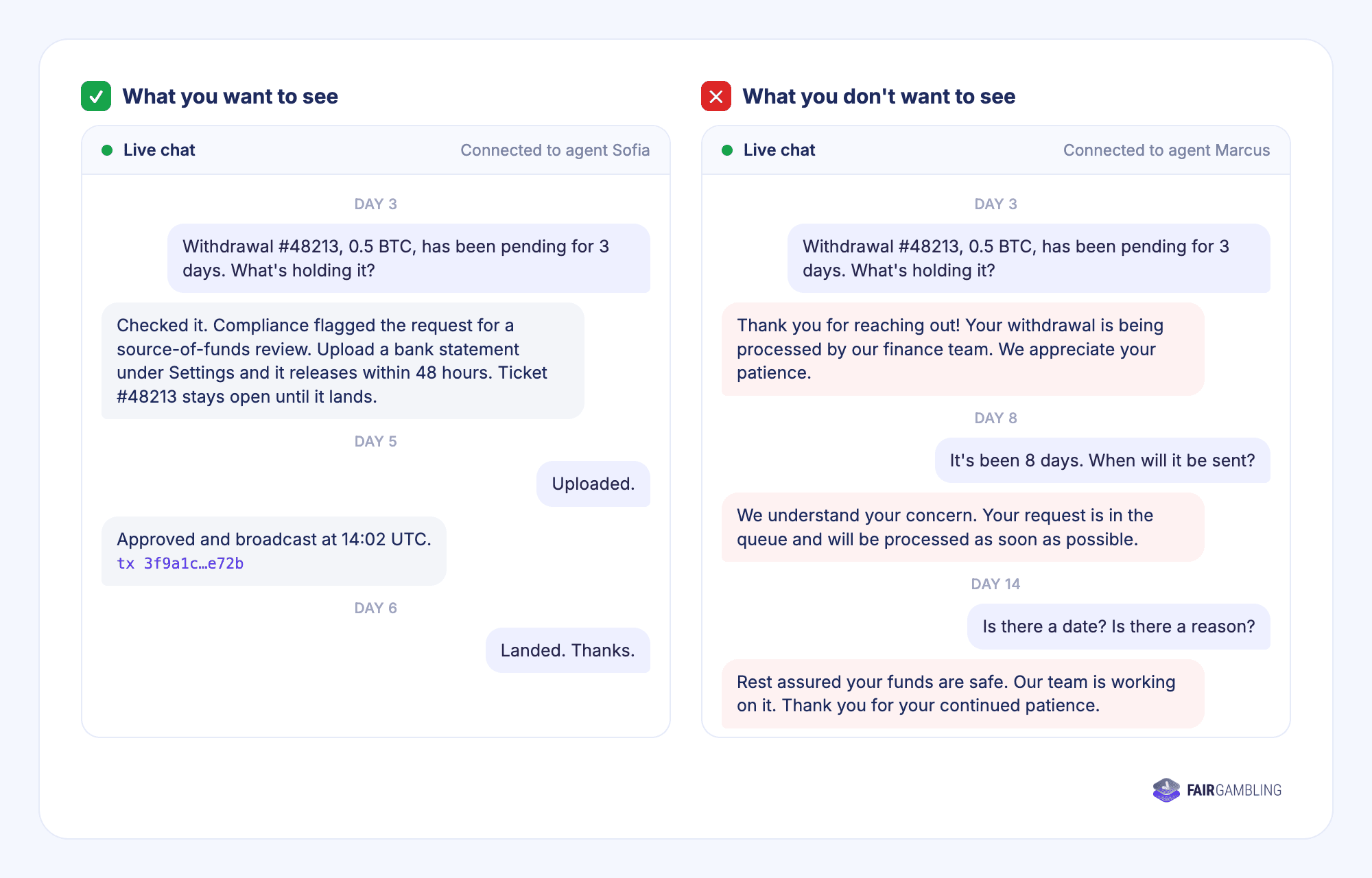
Slow, scripted support exists at casinos that pay. The worrying version is different: every reply says your money is on its way, and none of them says when. Equally alarming is seeing reps no longer active on social media, and slower support responses.
The check: in complaint threads, read the operator's replies; count how many answer the question.
Bonuses Get Louder While the Queue Gets Longer
Luck.io paid crypto influencers a reported $500,000 a month while its own daily revenue slid roughly 90% off its February peak. The Solana casino had processed $1.2 billion in wagers before it announced its closure on April 24, 2026 and shut five days later, eleven months after launch. Full Tilt ran the same trade at ten times the size, still taking deposits after its indictment.
Promotion doesn't prove anything. Reload calendars are ordinary marketing. Watch for the two together. When payouts slow and bonuses grow in the same month, the operator is using new deposits to cover old ones.
The check: put the promo feed next to the newest complaints; compare dates.
The License Moves Before the Money Does
The layer above the casino can fail too. On Dec. 24, 2024, the Dutch Supreme Court upheld a ruling making Curaçao master license holders liable for their sub-licensees' unpaid winnings. Two months earlier Cyberluck N.V., one of the four historic holders, was declared bankrupt after courts found it liable for money its licensees owed. A court ordered trust company Carmanco to pay more than $1.2 million in the same case. The court says the licensor owes you. The licensor is bust.
On its own, a license change is not a warning. Curaçao's 2024 reform made every operator reapply. The sign can also fire without the money stopping. BC.Game gave up its Curaçao license on Dec. 5, 2024, a day before the regulator was reportedly set to rule on revoking it, weeks after a court declared two companies behind it bankrupt over unpaid player claims.
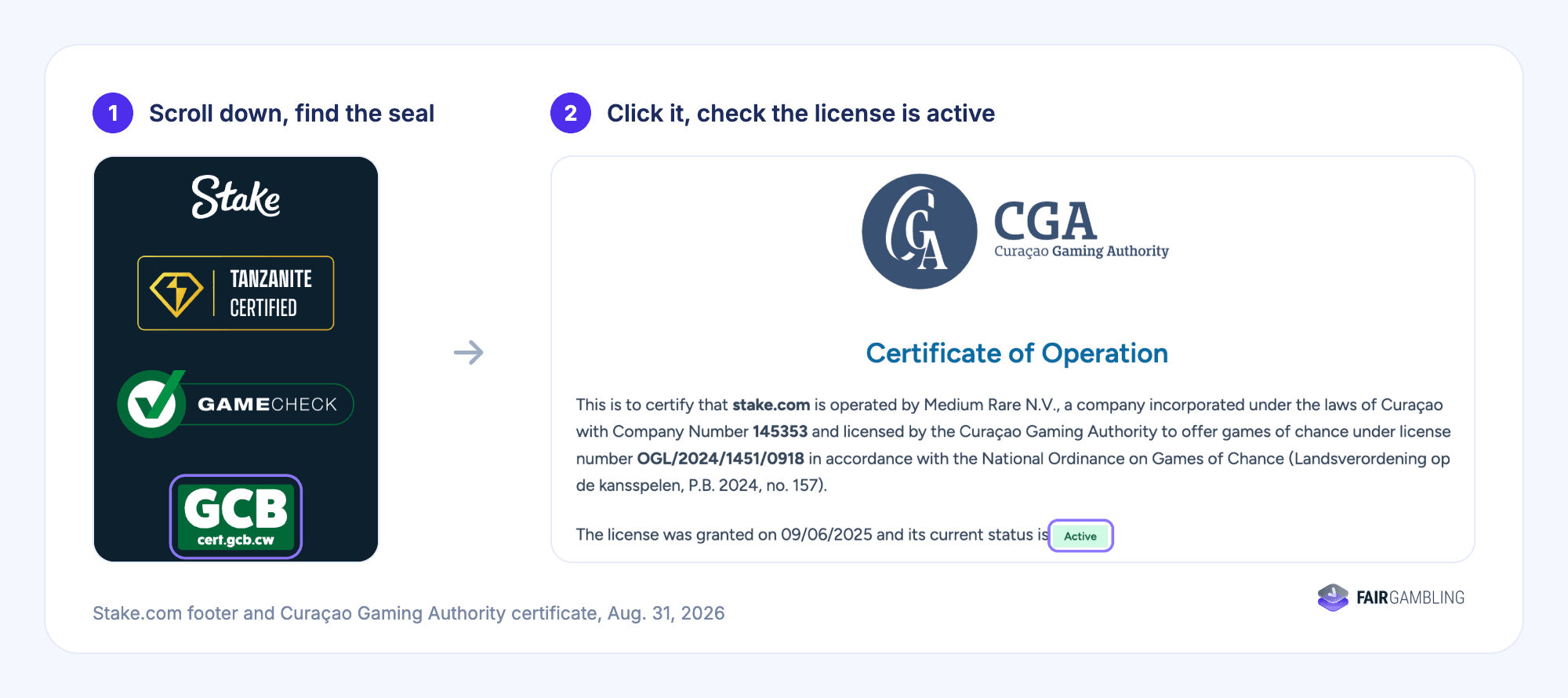
It denied wrongdoing, kept trading, and its deposits rose 45% last month on FairGambling. Look at when it happened. A license dropped the day before a revocation hearing is a different thing from one dropped in a routine reform year.
The check: find your casino's licensee and expiry in the register, then ask who sits above it. A licensor can go bankrupt while every site beneath it still displays as licensed.
Affiliate Payments Start Slipping
Affiliates are the quiet creditor: paid monthly, in arrears, with no balance to freeze. On Aug. 8, 2022, an affiliate of Malta-licensed Genesis Global reported missed commissions; he was paid three days later. The tell came Aug. 19, when another quoted his manager: “July payments have not been released for anyone yet.” In December, it entered insolvency, laying off 140 staff. On Jan. 16, 2023, Malta suspended the license and balances froze, with no staff left to process withdrawals.
It works both ways: one affiliate accused Chipstars of missing payments in July 2023; the forum closed the case a month later when he stopped responding, and Chipstars still operates. A single dispute means little, but watch out for program-wide non-payment.
The check: affiliate watchdog forums, where non-payment gets flagged before player complaints spike.
The Brand Is Younger Than the Story It Tells
Menace launched on Nov. 12, 2025 behind a media operation it said reached 1.99 billion impressions in two months. Six months later, it went dark with withdrawals blocked, its founder saying it had been sold and would relaunch under a different name. Its Anjouan license still reads valid, and the next brand starts with a clean record.
Domains also churn innocently: Stake runs official mirrors for blocked markets, and Brazil has required every licensed operator to use a bet.br address since January 2025.
The check: run the domain through lookup.icann.org, pull its first Wayback capture, and compare both with the homepage's “since” claim. Then read the footer for a license.
Keeping Safe
Withdraw a small amount and time it before you deposit seriously: a site that cannot return $50 today will not return $5,000 next month. And treat a casino balance as unsecured credit, not savings. There is no chargeback in crypto and no deposit insurance anywhere.
At the first sign of trouble, stop depositing and start withdrawing, keep dated screenshots, archive the terms page, and never deposit to “unlock” a payout. Treat the window as closing after additional signs and move fast—you don't want to be last in the withdrawal queue.
5Dimes stopped US betting Sept. 21, 2020 and shut withdrawals four days later, announcing it only on Sept. 30. Unclaimed balances went to a claims administrator, then a year later to the US government. Even orderly exits run on a clock: BetHog closed July 30, self-serve withdrawals end Aug. 31, then support emails will run the process.
Every casino we rate lists license, limits and fairness certification on our casinos page; if you have a stalled withdrawal, post a complaint.
Make sure to read our guide on spotting a trustworthy casino for more tips & tricks on staying safe.
Treat gambling as entertainment you pay for. 18+, and if it stops feeling like entertainment, help exists at BeGambleAware and GamCare.