First Impressions: Freeroll, a Variance Vault Casino
In April 2026, Finn Hulse caught the gambling world's attention with a tweet that started with the words "In the future, casinos won't make money." His vision: "A community-led casino that puts wins back in the community's hands." Sounds like a gambler's dream, but is that all it is?

Ever heard the phrase "the casino always wins"? Well, this is what Freeroll and Finn Hulse are promising to end. More specifically, by creating a casino that offers "full custody, full transparency, zero house edge."
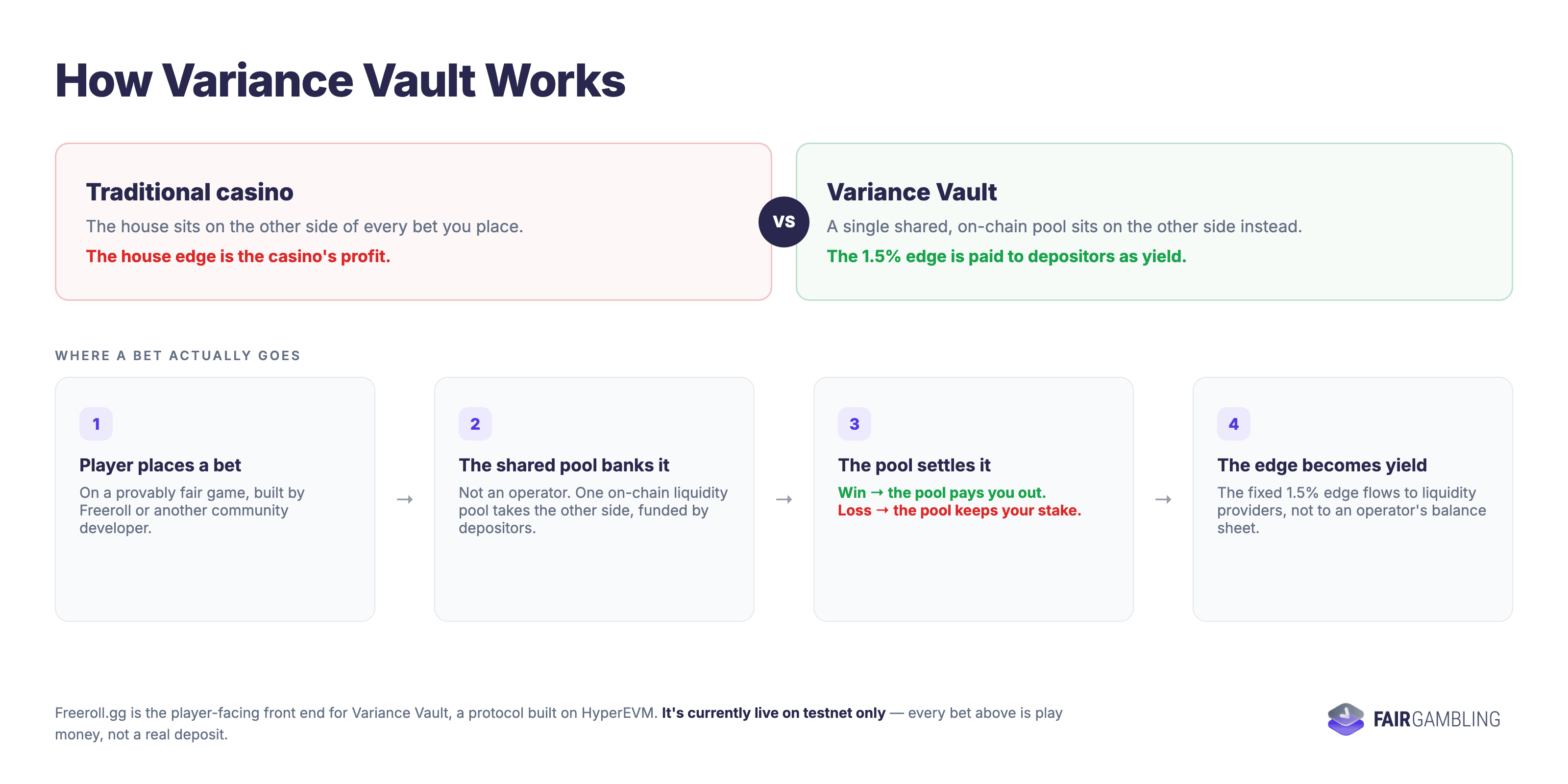
In the pursuit of this, they have created Freeroll Casino. It runs on Variance Vault, which its builders describe as a "house-banked variance exchange" on HyperEVM: a single shared, permissionless pool plays the house, taking every bet at a fixed 1.5% edge.
That edge is what liquidity providers earn as yield when they deposit into the pool.
What's under the hood?
Not only can players register and play provably fair games using the protocol, but they can also contribute their own games for others to play. This creates an ecosystem where everything is user-funded, and the network runs on participants' liquidity.
This takes place on the Freeroll.gg website, which functions as the player-facing front end of the system.
When playing these Variance Vault community-made games on Freeroll, players bet against a shared liquidity pool rather than a house. Instead of an operator taking a cut, that on-chain pool banks every bet: it pays out when a player wins and collects the stake when a player loses, and anyone who deposits into it earns the edge as yield.
This concept is a spin on the well-known "bankroll participation" feature, in which crypto casinos would allow players to contribute to the bankroll and share in the house's profits (and losses). CryptoGames and the now-defunct Just-Dice were early pioneers in this space.
Wins and losses are taken from and given to that pool, rather than the house. The community, not a casino, sits on the other side of the table.
But does it work? In short, we don't know.
It is currently running live on testnet; this means free play money rather than real deposits, but the pitch is that the same pool will eventually take real bets at scale.
What's on show?
I explored the testnet, and I can't say I was blown away, at least not by its aesthetics. I don't believe many players will be here at this early stage, and that's natural; this is a testnet, and there's plenty more to come.
However, there are some early learnings that should be considered for the future.
My first impression was "Stake with far less going on," as the general color scheme and design are reminiscent of Stake. In my opinion, some of their games even have the same sort of cartoon aesthetic as what you see on the Stake Originals collection.
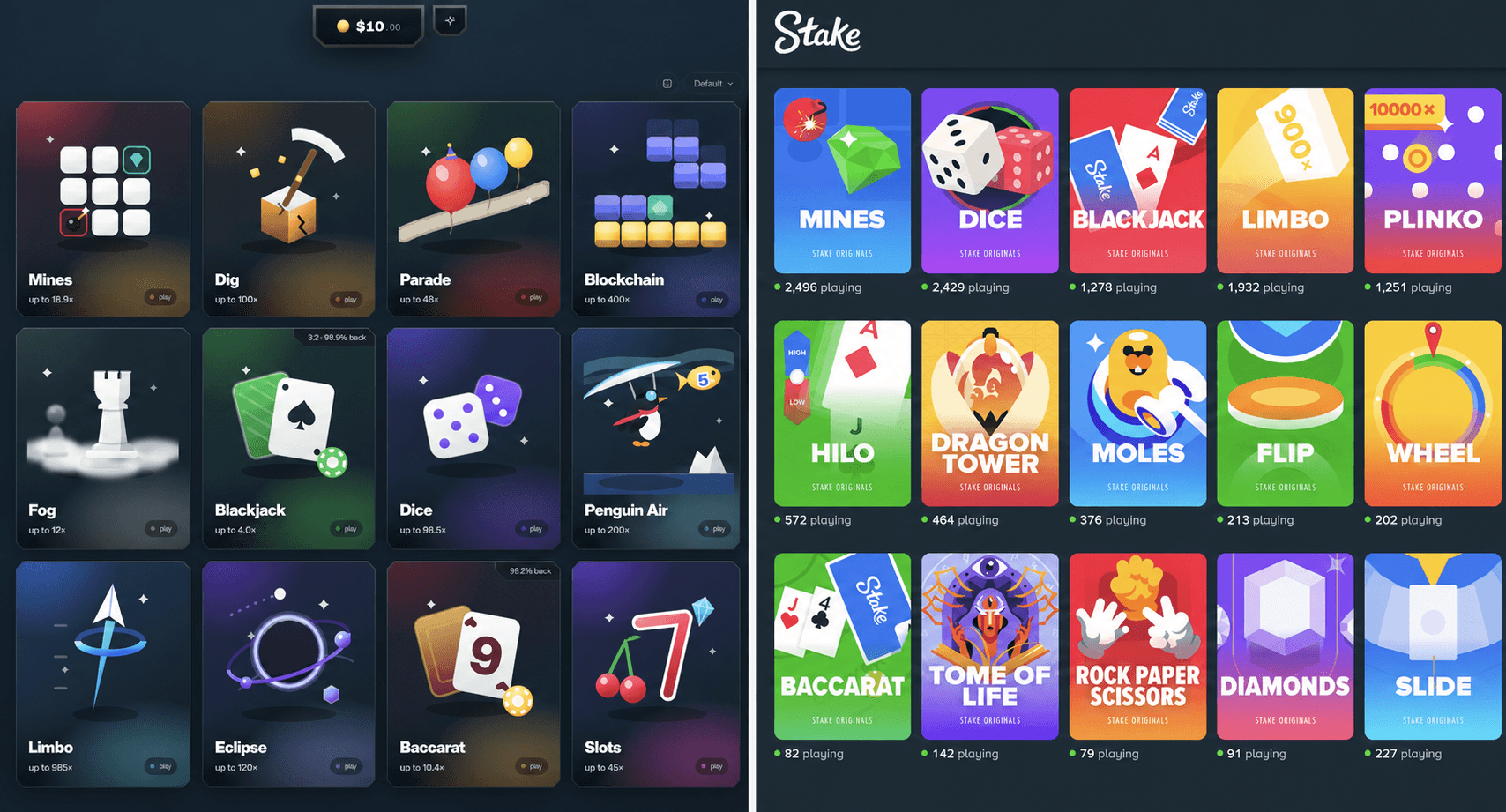
You have a "lobby" with a sidebar listing all the same games shown in the lobby. Click on a game, or click its sidebar entry. Either one opens the same game interface.
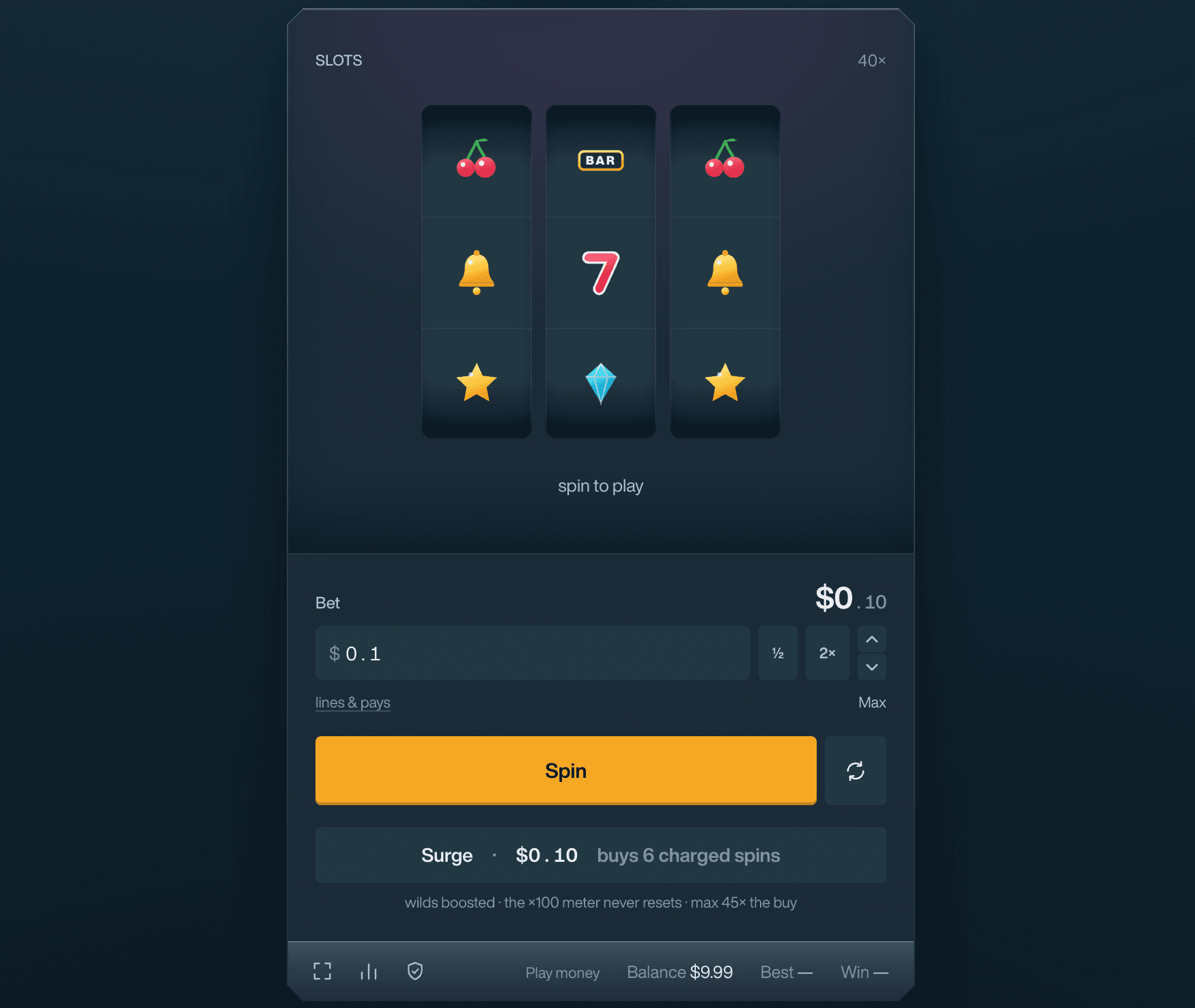
You can play a selection of online casino classics like blackjack, baccarat, and slots, though the designs feel basic, particularly the slot game, which isn't going to pull too many players away from Big Bass Bonanza just yet.
To put it bluntly, it's all a bit limited for a casino in 2026.
What works in their favor is their "specialty" and "instant win" games. For those unaware, these are essentially mini-games that are simple to play and have quick outcomes; many require an element of skill, which is why they're sometimes called "skill games" (Fish Shooting is a classic industry example of the genre).
These is an up-and-coming market. Having emerged as "non-traditional" casino content back in 2021, they have gone from novelty to staple, and today make up 1-3% of lobby content across Europe's biggest regulated markets, with player demand growing faster than operators can make room for it.
The best-known of these today is Crash Games; some previously saw these as a flavor-of-the-month fad, but they continue to do numbers at many sites. Freeroll has two of its own Crash games, along with an assortment of other specialty titles.
These include existing specialty favorites like Dice and Plinko. My personal favorite was the skill-based Darts game, which earns you a multiplier based on where the dart lands.
This is what they need to lean into early on. This is because they are cheap to build, simple to play, and addictive.
It seems they've cottoned on to this, with their latest addition: Dig.
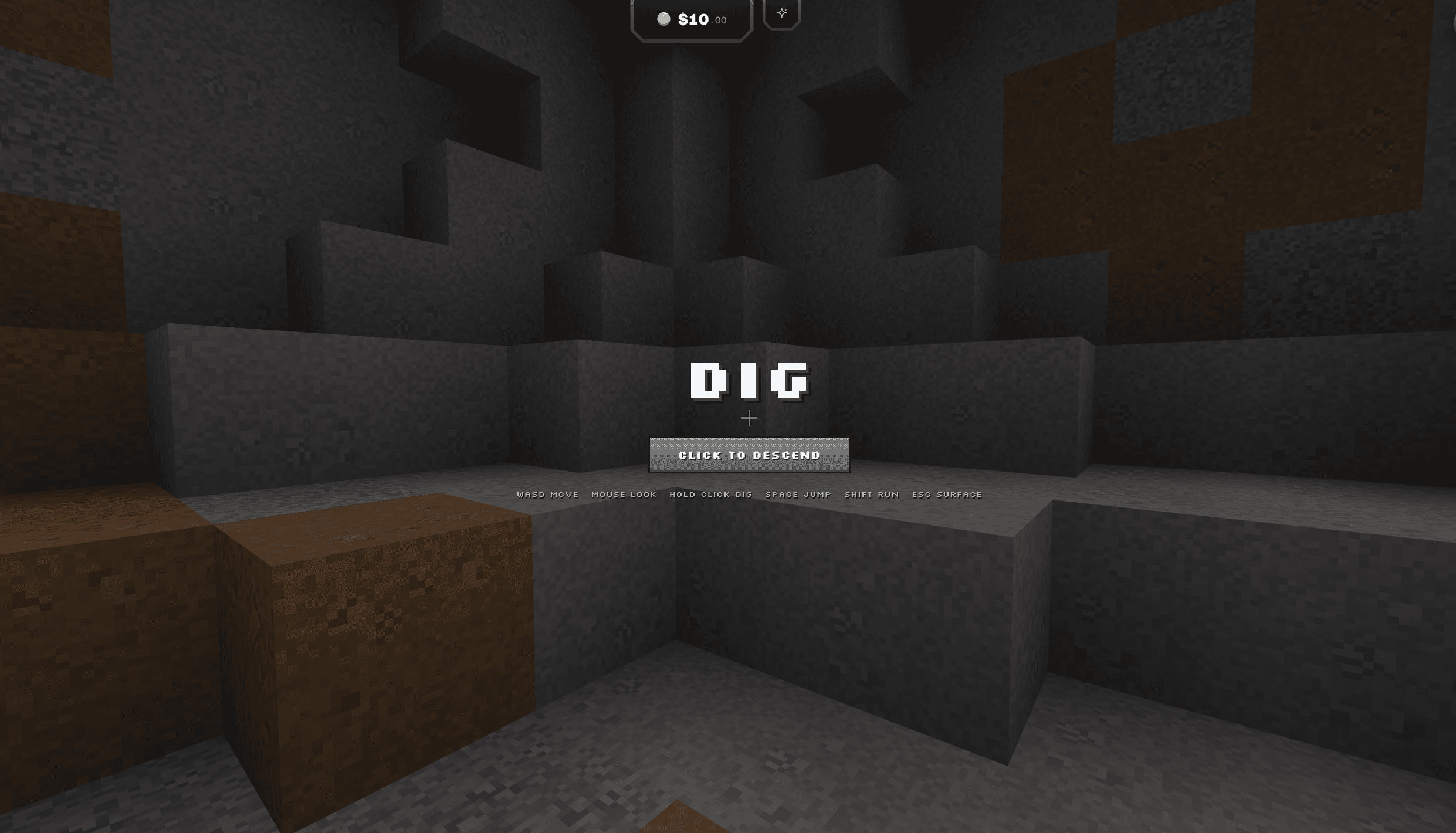
Dig is essentially a gambling version of the hyper-popular (and hyper-addictive) Minecraft. You smash rocks to earn diamonds (a win), or hit a stone with nothing (a loss); either way it contributes to or detracts from the prize pool, currently sitting at $15,000 (fun money).
The game launched in late July, and within days Finn Hulse was reporting 3,000 bets played on testnet, with a further 4,000 through external apps. So there's clearly an appetite for what they're building.
Who is behind it?
One of the most compelling factors for Freeroll is that we know exactly who is behind it: Finn Hulse and the Freeroll labs team. That's refreshing in this space, where most new crypto sites seem to pop out of thin air with nothing to support what they're doing or how.
The frontman of this operation is definitely Finn Hulse. He has been vocal about this project from the get-go. He cut his teeth as a quantitative trader before setting his sights on start-ups: Deskhead (an AI-powered trading platform) and Liquid (a fintech "super-app" built to drive the cost of conviction to zero). Since May, a month after this concept went live on X, it has become his full-time focus.
He seems dedicated to the concept of ethical gambling and betting that actually benefits the people taking part. That comes through clearest in an article he penned titled "Gambling is good. What exists right now costs us everything," which reads as his personal manifesto for everything we've seen from Freeroll and Variance Vault over the last few months.
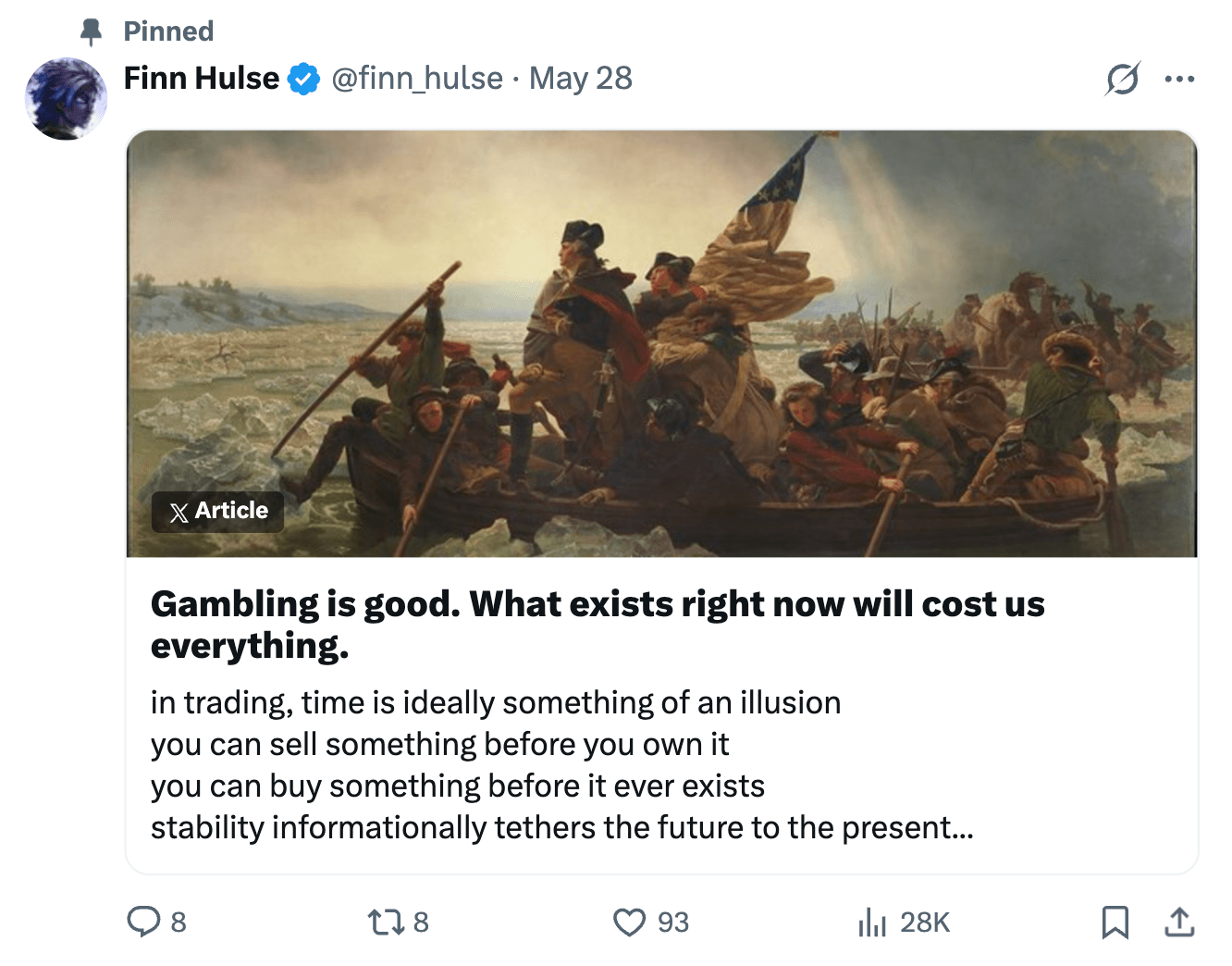
The core motif running through both the essay and the product is the same: strip gambling losses away from the big operators, and funnel them back to players as a collective yield instead.
From what we can see of his social media activity (namely "streamer-esque" videos of himself moving around the network, explaining how the ecosystem works and playing the games himself), he seems dedicated to this cause in a grassroots sort of fashion that has long since vanished from the glitz and glam of the modern gambling industry.
Variance Vault is that vision turned into code: Hulse built the protocol himself, announcing it in April 2026, and his Freeroll Labs now builds the casino on top of it. It runs on HyperEVM, the general-purpose smart contract layer of Hyperliquid, a perpetuals DEX that has grown into one of the biggest exchanges in the business.
HyperEVM went live in February 2025, opening that infrastructure up to general-purpose programmability, and Variance Vault launched as one of the newer products to come out of it in April this year.
Transparency is key to me, but what matters more is the paper trail, and we have that in abundance with this project. It's the perfect recipe: a young, ambitious, smart front-of-house guy with the resources behind him to back it up. Feels like a match made in heaven.
Our Verdict
Who wouldn't love this concept? Putting the power back in players' hands. However, let's face it, it's still very early doors. This lives or dies on whether Finn Hulse and Variance Vault can garner enough attention to capture the imagination of enough of the ecosystem to get behind it.
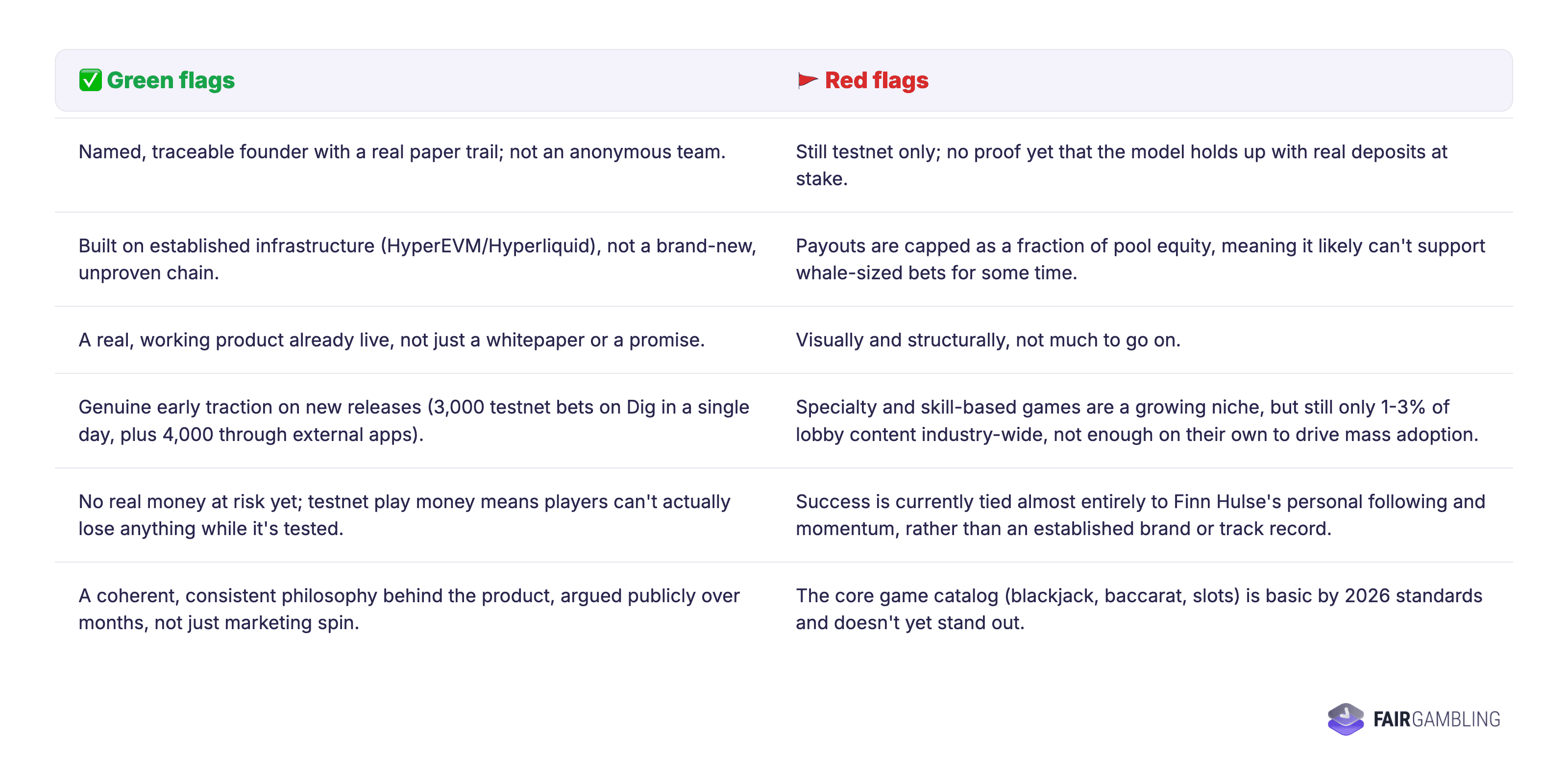
I think the other major factor here is whether simplicity ends up being their champion or their downfall, and from what I can see, there's not enough to go on yet.
An earlier version of the Variance Vault site has since been retired, so for now, player experience runs through the current testnet and the Freeroll front end.
The biggest issue isn't about pulling whales away from the likes of Stake or Rainbet; it's the more fundamental, adoption-level question: what does this platform offer players that makes the trade-off worth it?
Take a look at the slot game below and consider whether you think it's appealing enough to attract the sort of clientele that can make Freeroll a hit.
From a gaming point of view, their homegrown, exclusive skill-based games made by players for players sound great, but that niche is still small within the casino base. It likely isn't going to attract the right players.
This links to another issue: for the biggest players, gambling isn't just about risk, but about being able to bet big. Variance Vault's own solvency design caps each payout at a fraction of total pool equity, a safeguard that keeps the protocol solvent no matter the game.
That's exactly the kind of guardrail a five- or six-figure bettor doesn't want to hear about. Until the pool is deep enough to comfortably absorb whale-sized bets, the players who've made their fortune chasing the biggest possible risk have little reason to move.
For me, this currently looks like a site aimed at the small fish, and that's not going to be enough to get it up and running with the big boys.
Treat gambling as entertainment you pay for. 18+, and if it stops feeling like entertainment, help exists at BeGambleAware and GamCare.