Nine Crypto Casinos Offline As $5.3M Bankroll Drained
Several crypto casinos are offline as a hack at a platform provider drained about $5.3 million from a shared bankroll. Most of the funds have since been frozen.

· 4 min · 4 min read
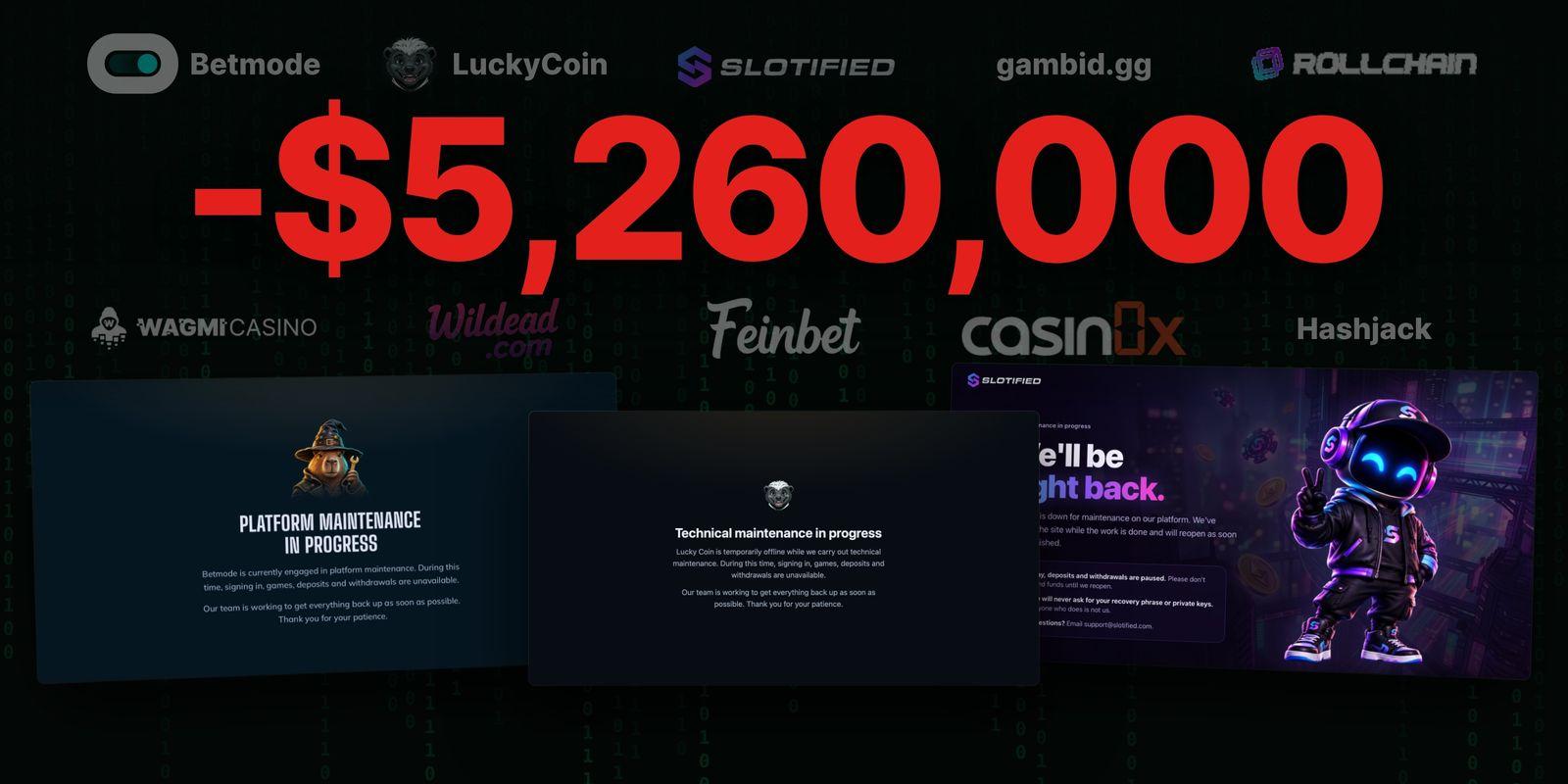
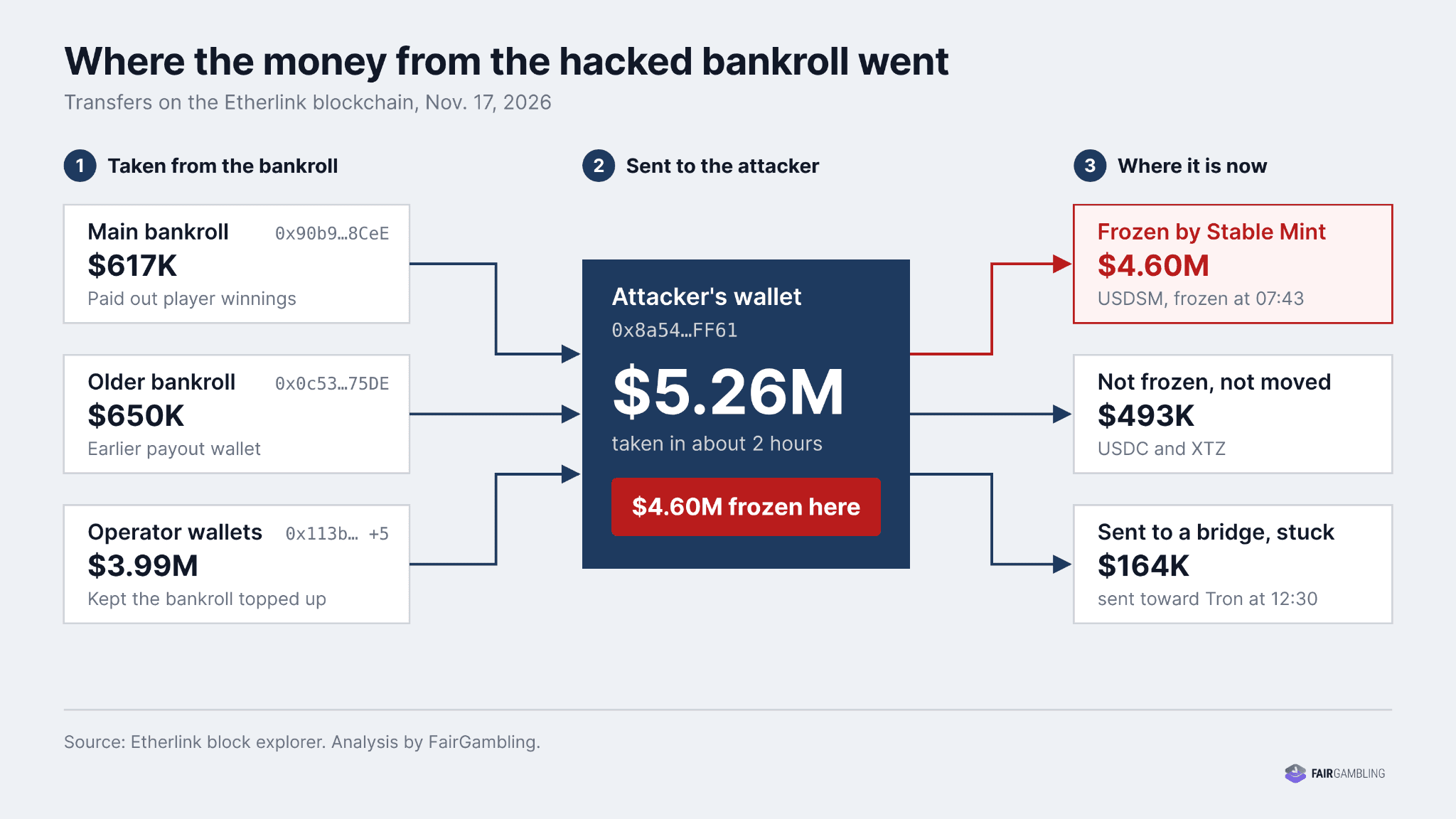
On Nov. 17, an attacker broke into a crypto casino platform and moved $5.26 million from a shared bankroll, and the wallets that funded it, to a new wallet. On Nov. 19, nine casinos, all on the same gaming license, were offline or under maintenance.
“Rest assured that player funds are safe,” Betmode, one of the casinos affected by the attack, said in a statement shared with FairGambling.
The casino confirmed the breach in the same statement; “Unauthorized access was gained to the platform systems, bankroll and player wallets.” it said. According to Betmode, the provider managed to freeze the wallet and has since rebuilt the platform with extra security. It said the casino should be “up and running soon again.”
LuckyCoin and Betmode have shown a maintenance page since Nov. 17.
The platform behind it
Betmode did not name the provider, but the evidence points to DeGaming, a casino platform company based in Stockholm and Cyprus.
Both drained bankrolls on Etherlink were created by a contract named DGBankrollFactory, and DeGaming announced in October that it was running LuckyCoin’s bankroll as a service.
The casinos themselves are run by a separate company, ONCHAIN Technologies Ltd, which holds a gaming license in Anjouan. The regulator’s register lists 10 casino domains under that license, and nine of them were offline or under maintenance on Nov. 19. The register still shows the license as valid, although its listed expiry date was Oct. 31.
One of those sites, Gambid, names DeGaming in its website code as the company handling its player balances and withdrawals.

Its homepage also links its “Total bankroll” panel to a wallet that a user online named in May as the cold wallet for all the casinos. That wallet still holds 2 million USDSM and was not touched in the hack.
The shared bankroll
LuckyCoin posted the now empty bankroll address on BitcoinTalk in May as proof of its “$3M Bankroll”. On Nov. 11, Betmode shared a post on X with three player payouts, and all three were sent from that same bankroll address.
Another part of the money came from an older bankroll, which a BitcoinTalk user flagged in May. “I’ve checked betmode, rollchain, wagmi and all shares the same hotwallet,” the user wrote, posting its address.
LuckyCoin's representative replied in the same thread that “the reward/payout wallets are shared across sites on the same license setup”. According to them, the same wallets were paying out winners on several sites.
Timeline
The first big transfer came at 05:06 UTC on Nov. 17, when the shared bankroll paid 617,498 USDSM to a wallet that had no activity before that morning.
Eight minutes later, an older bankroll paid 649,908 USDC to the same address. The new wallet never paid for its own gas, since the first XTZ came from an operator key at 05:27.
At 05:49, the key that set up the bankroll contract gave payout rights to a new address.
At 06:01, six wallets with operator access to the bankroll sent the new wallet 3.88 million USDSM within seconds of each other.
Bets kept going through
Smaller amounts were swept from player deposit and fee wallets over the next hour. Bets were still going through while this was happening. The bankroll took in a player's bet at 06:02, while the wallets were being emptied.
At 07:00, the last 219,000 USDSM in the bankroll went to a separate operator wallet instead, where it has stayed.
The bankroll has had no activity since.
Frozen at 07:43
At 07:43 UTC, Stable Mint, the issuer of USDSM, blacklisted the receiving wallet.
Betmode told FairGambling that the platform provider arranged the freeze. The wallet is the only address ever blacklisted on the token's Etherlink contract.
The freeze locked 4.6 million USDSM in place.
At 12:30, the wallet sent 164,181 USDC through LI.FI, a bridge aggregator, toward a wallet on the Tron blockchain. LI.FI still lists the transfer as pending, and nothing has arrived on Tron. It's not clear why it hasn't gone through.
The wallet also holds 492,542 USDC and 977 XTZ, which at least in theory can still be moved. That USDC can’t be frozen, since it’s a bridged version that Circle, the company behind USDC, does not control.
Since Nov. 17, none of it has been touched or moved anywhere.
What is still unclear
While $5.26 million left the bankroll on Nov. 17, most of that money isn’t actually lost. The bankroll was mostly held in USDSM, a stablecoin that its issuer can freeze, leading to the funds being locked in the attacker's wallet within hours.
Stable Mint has not said whether it will return the frozen funds, although stablecoin issuers can reissue frozen tokens to their rightful owner.
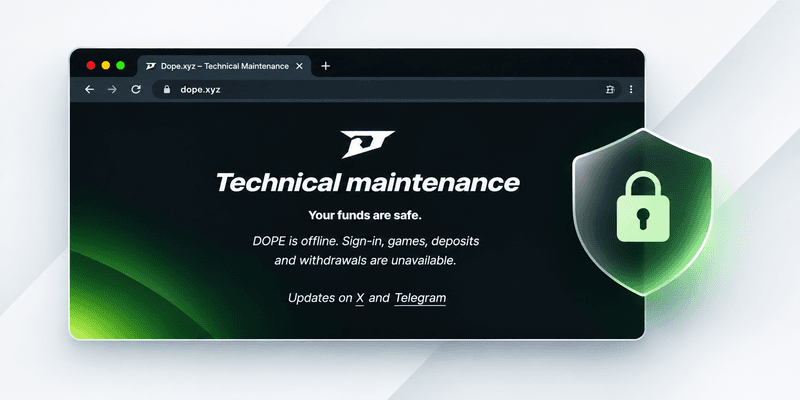
Dope, another crypto casino on Etherlink, also went offline on Nov. 17. Its founder said on Nov. 18 that the attack was unsuccessful and that the attackers' wallets were frozen through Dope's Etherlink partnership. FairGambling found no on chain link between Dope and the wallets in this story.
FairGambling asked Stable Mint why it froze the wallet and had not received a reply by the time of publishing.
Treat gambling as entertainment you pay for. 18+, and if it stops feeling like entertainment, help exists at BeGambleAware and GamCare.